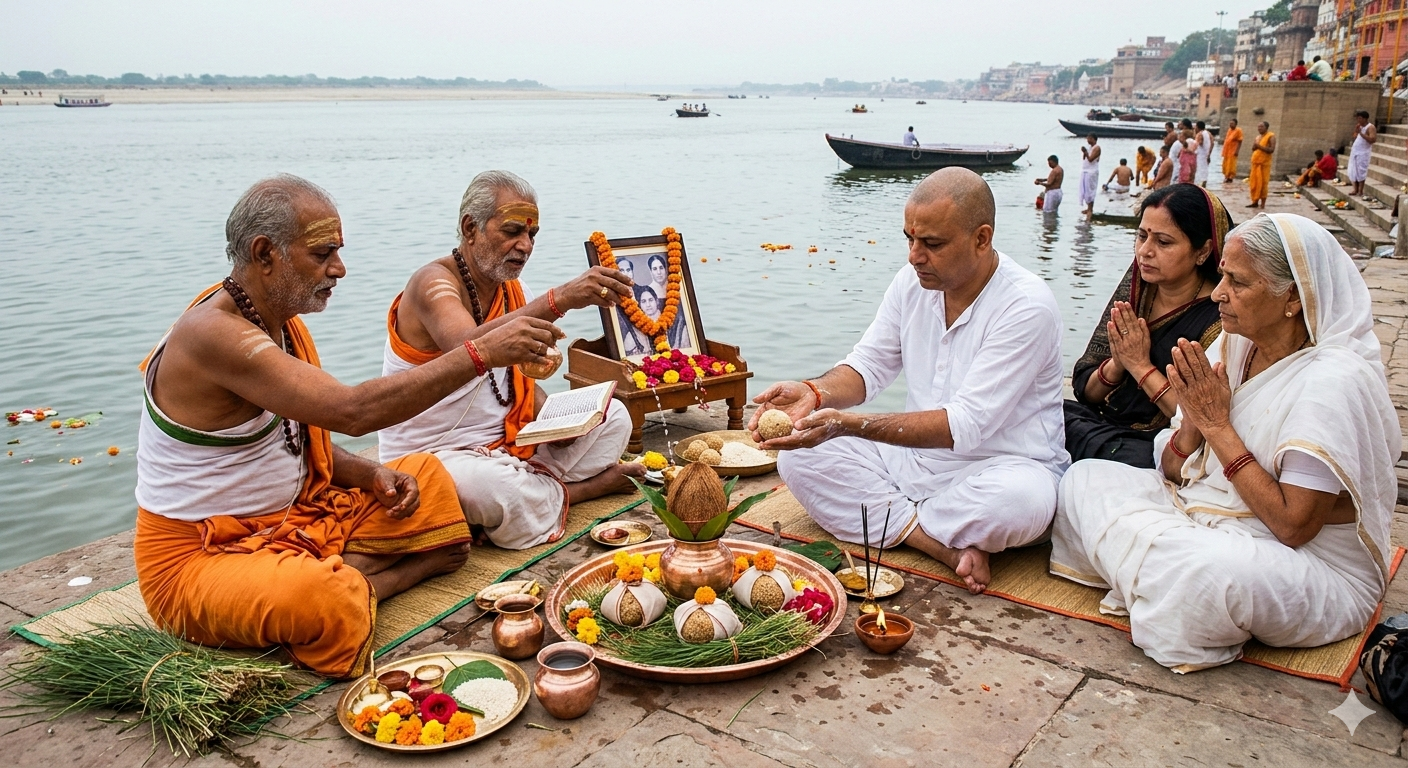
Pitra Paksha Puja
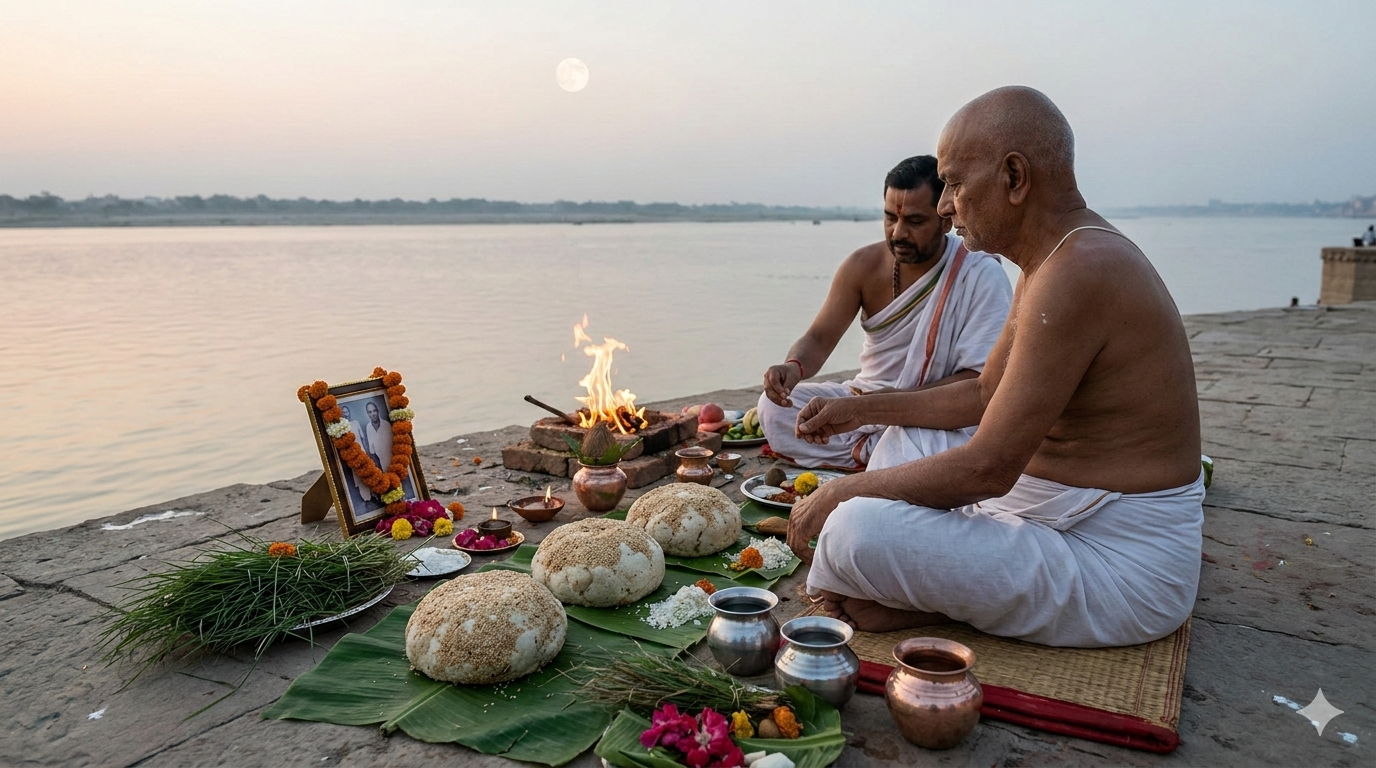
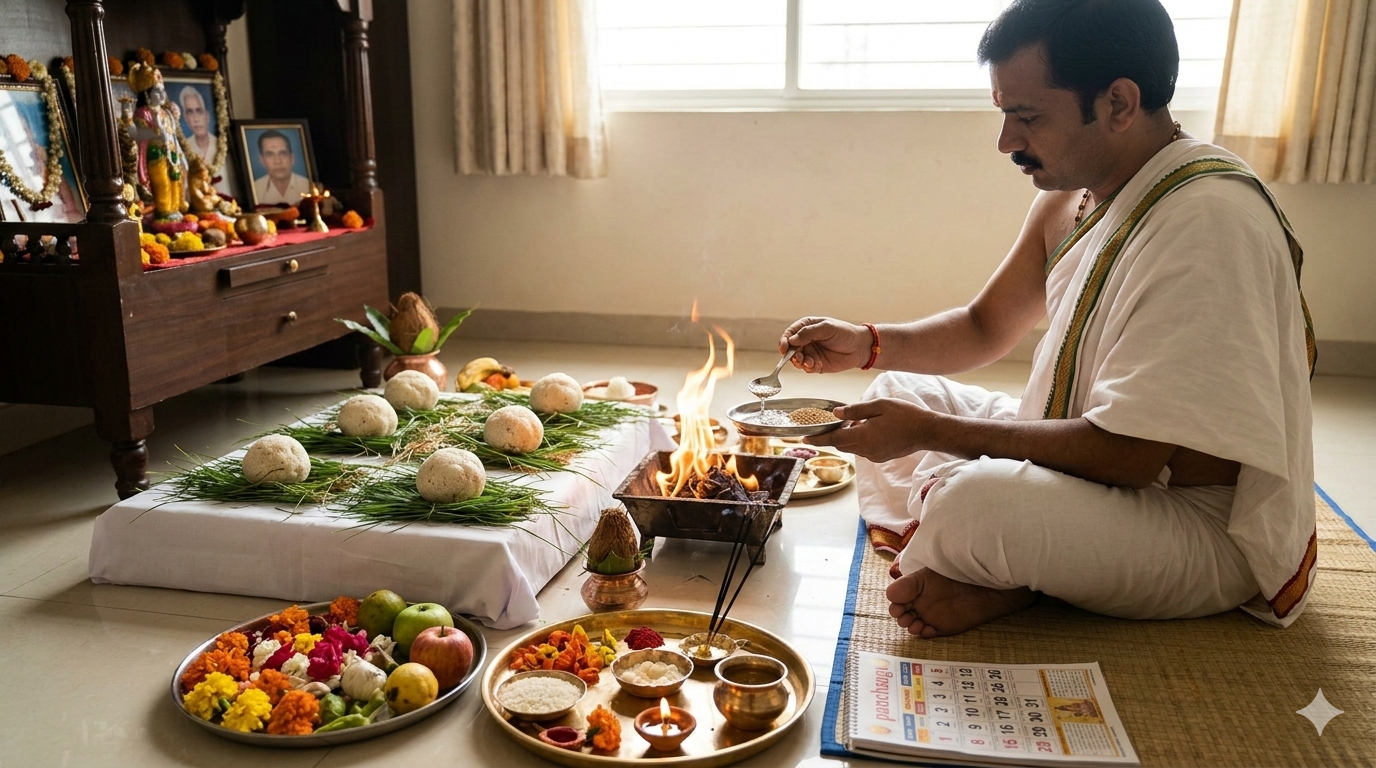
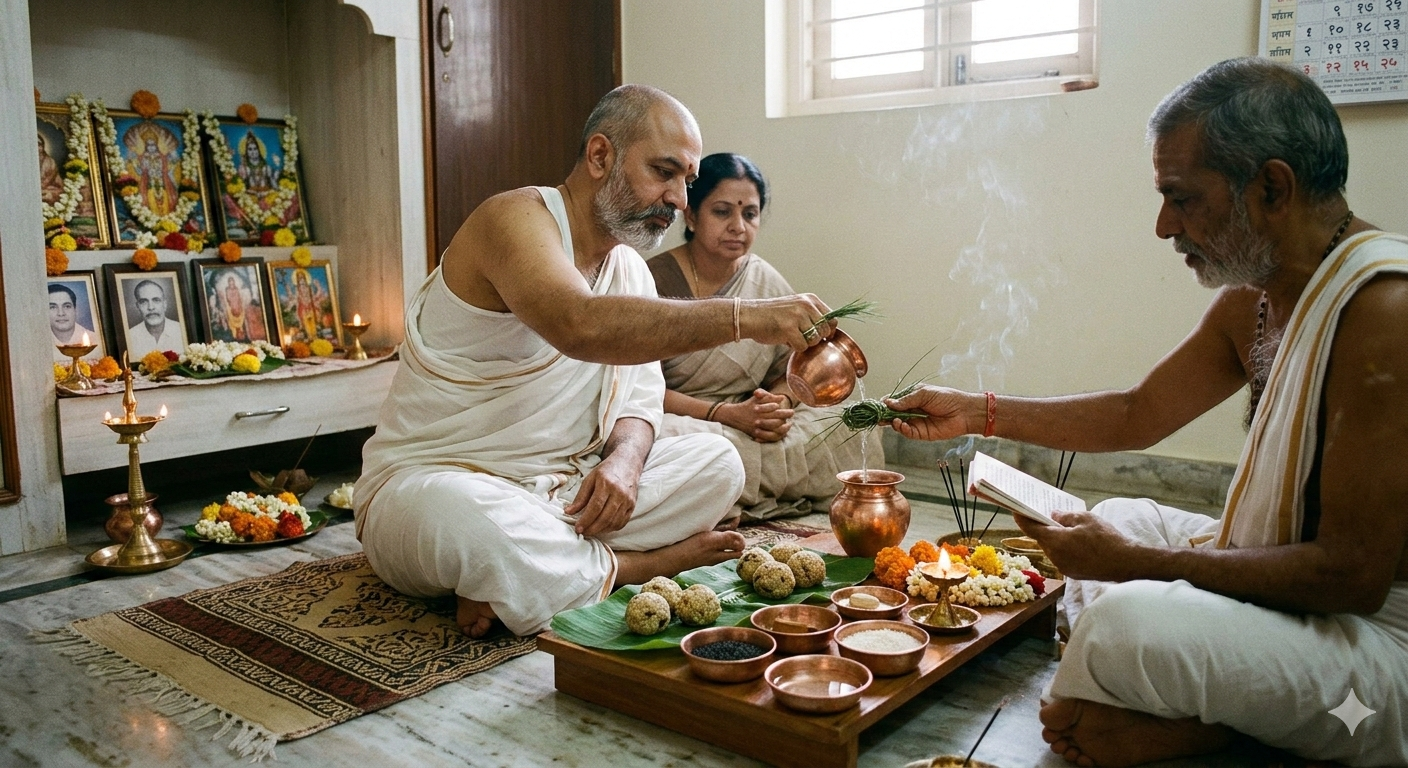
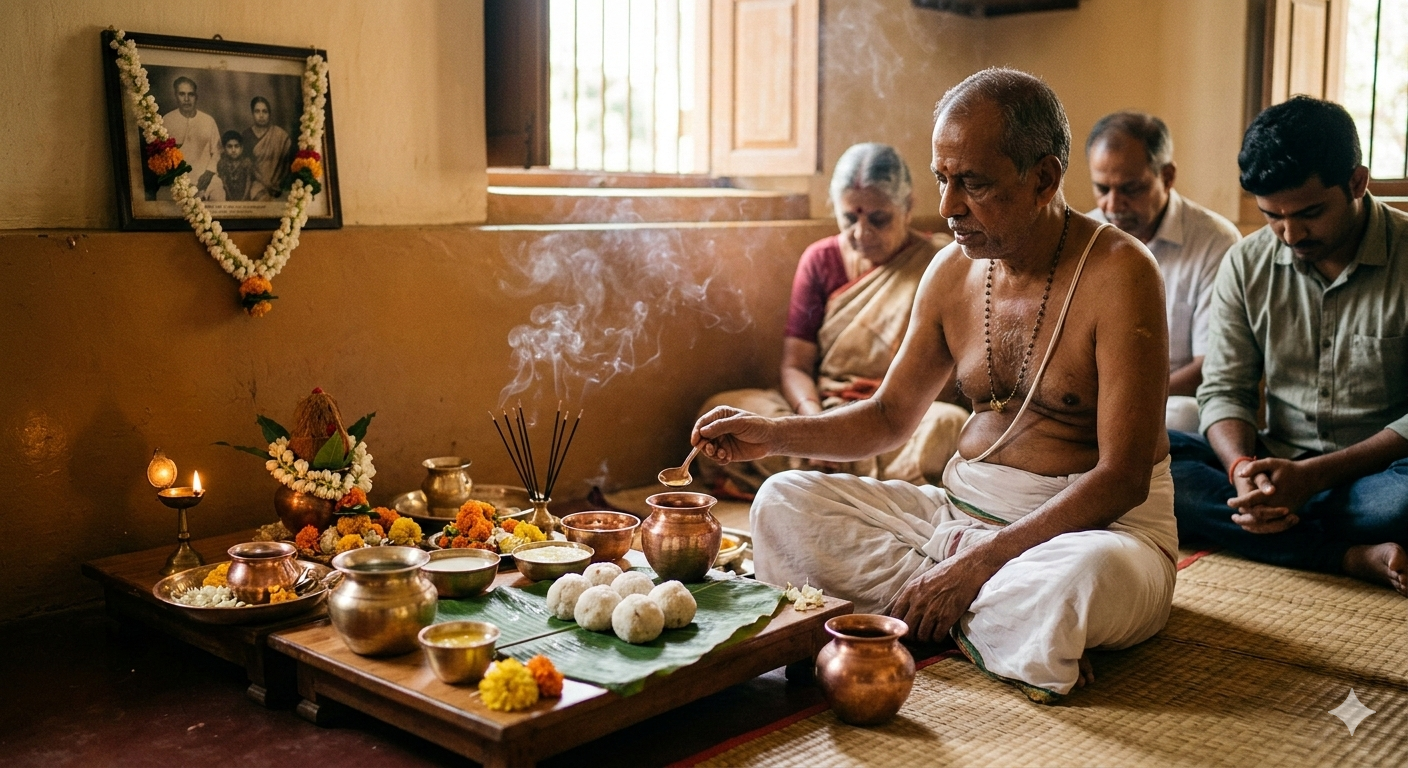
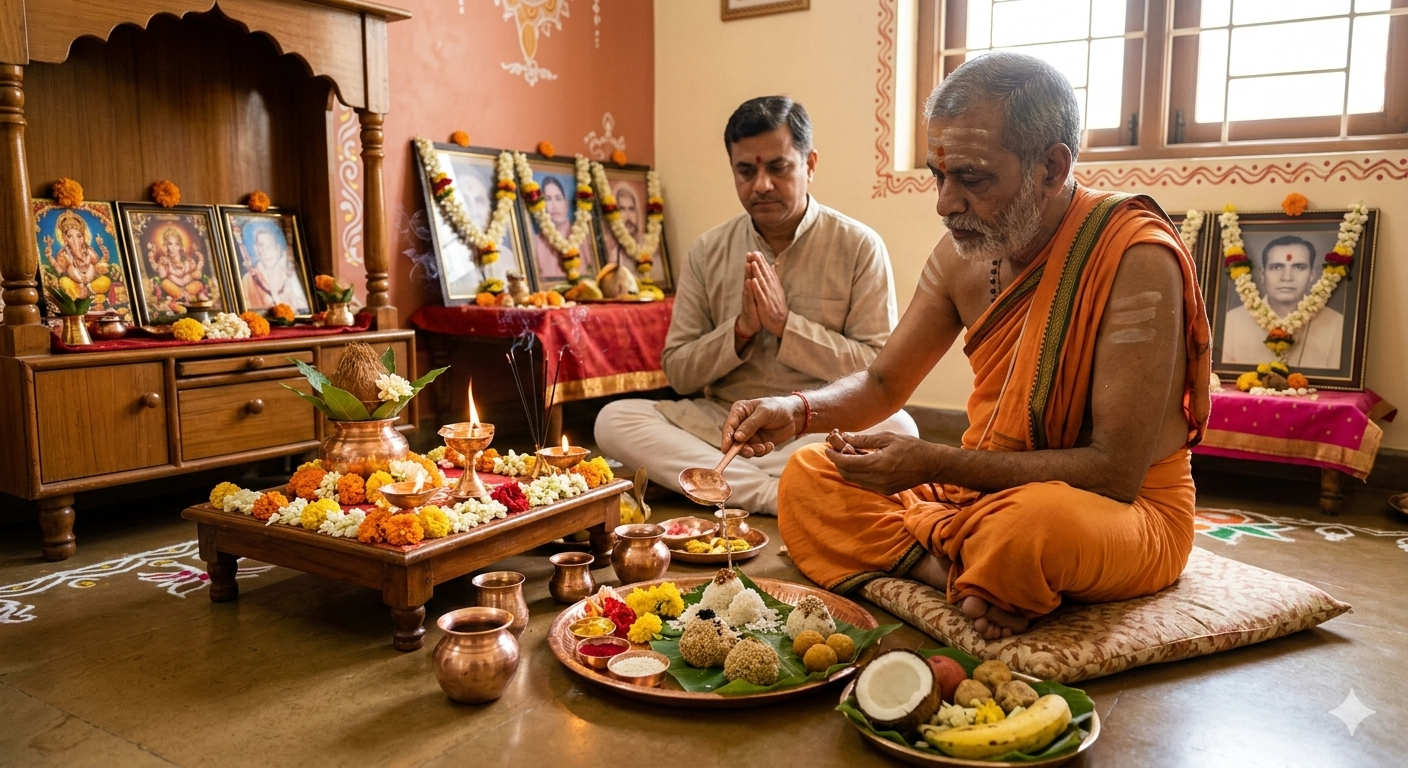
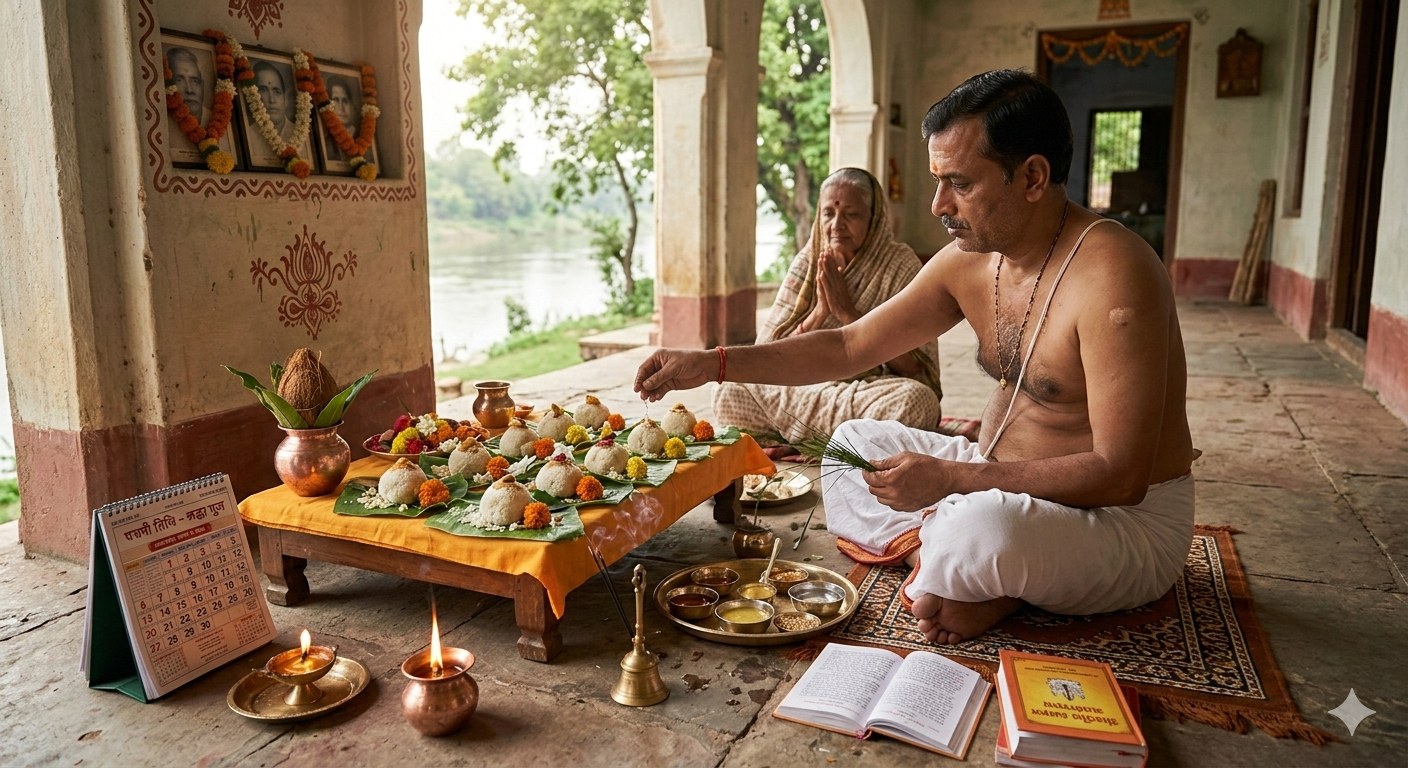
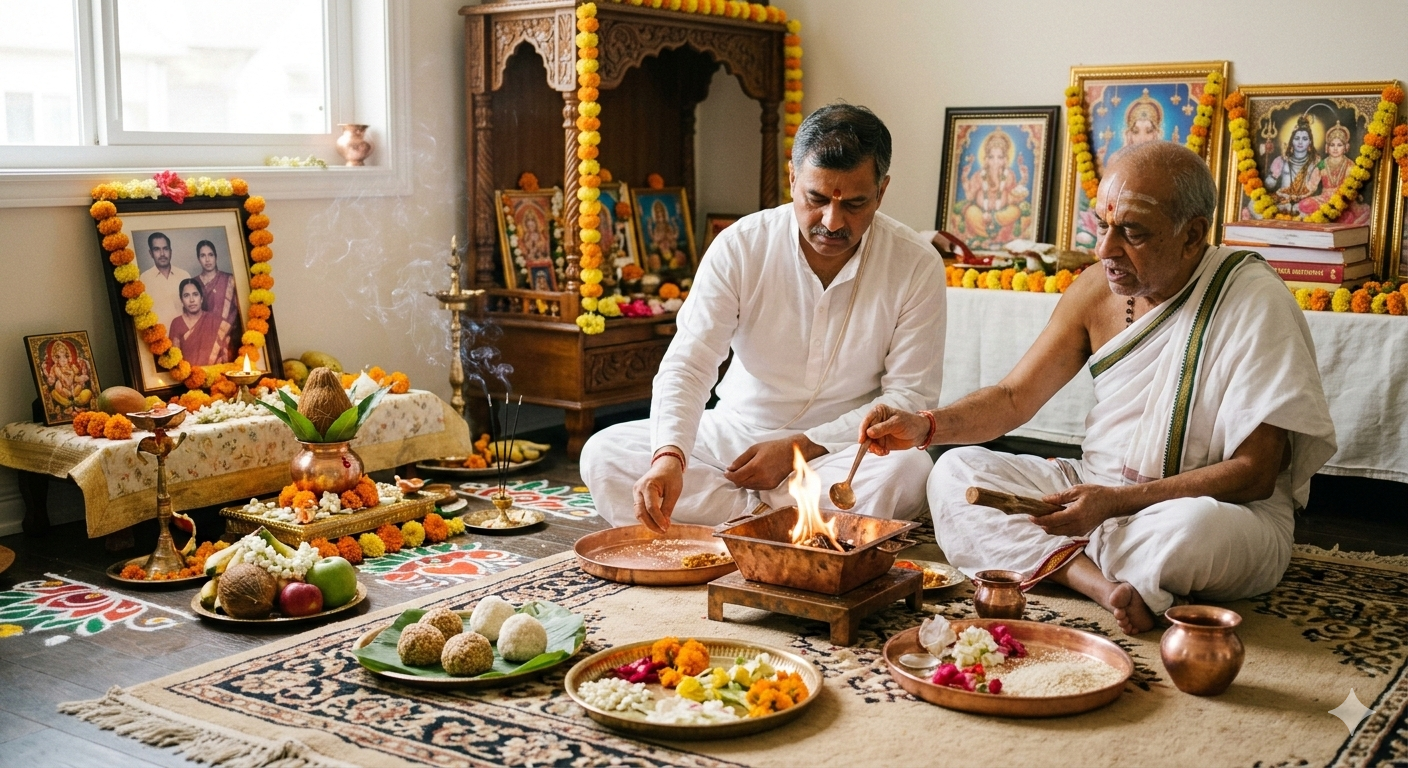
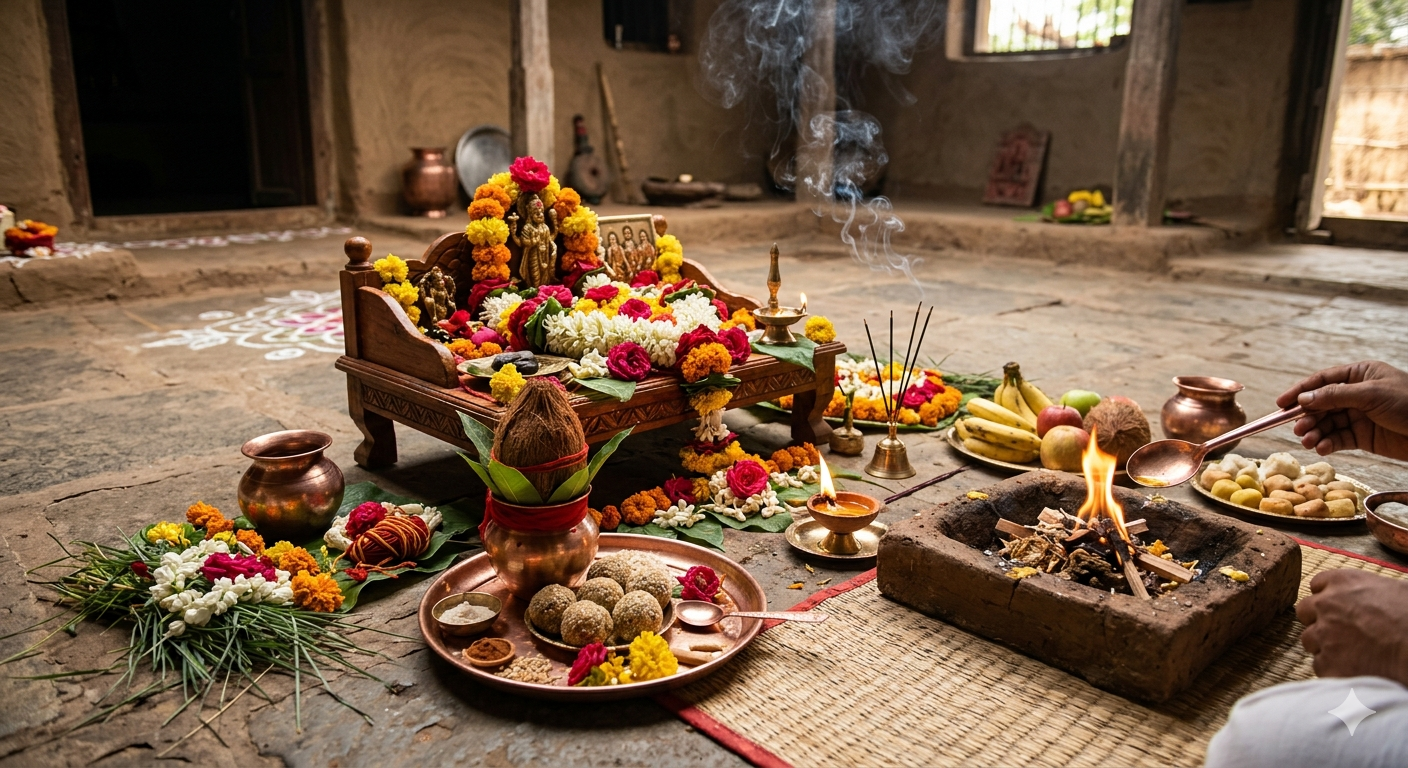
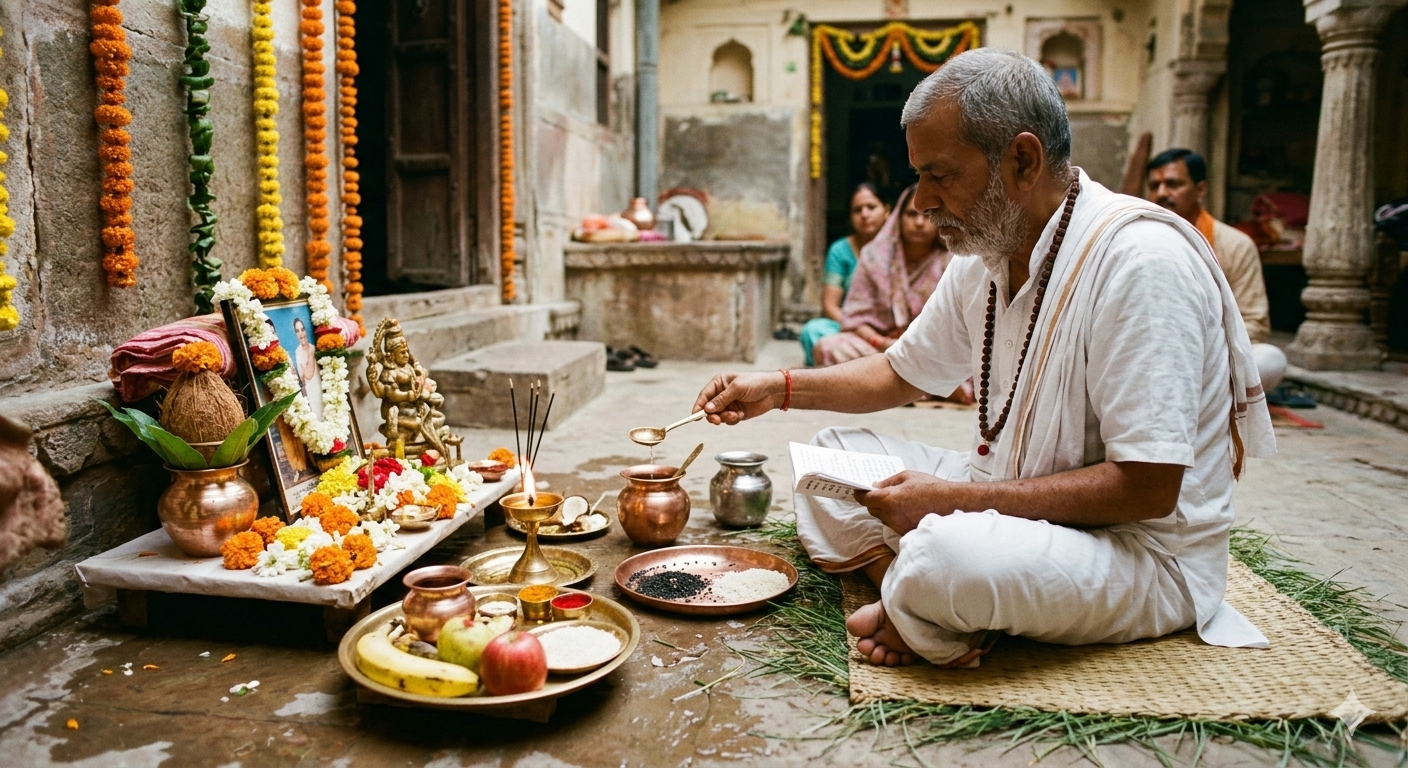
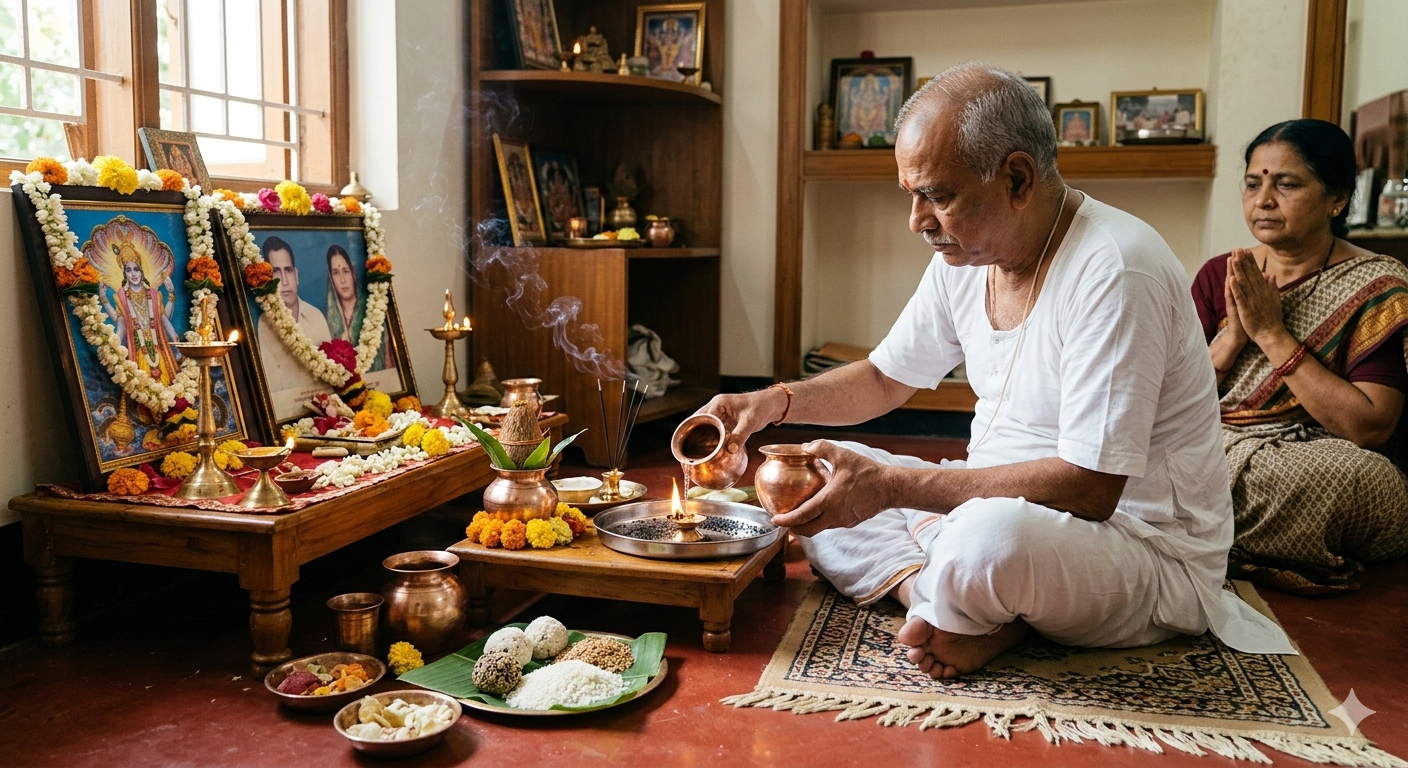
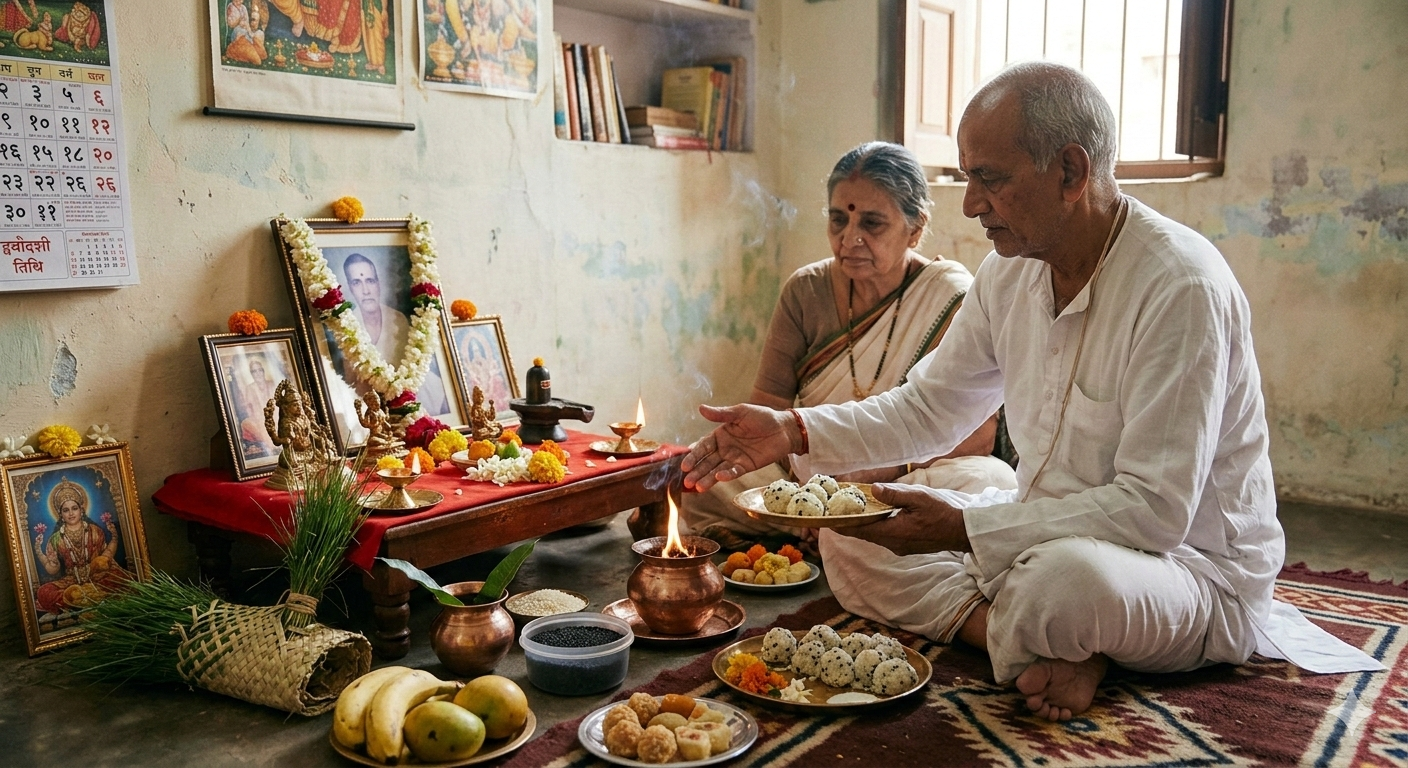
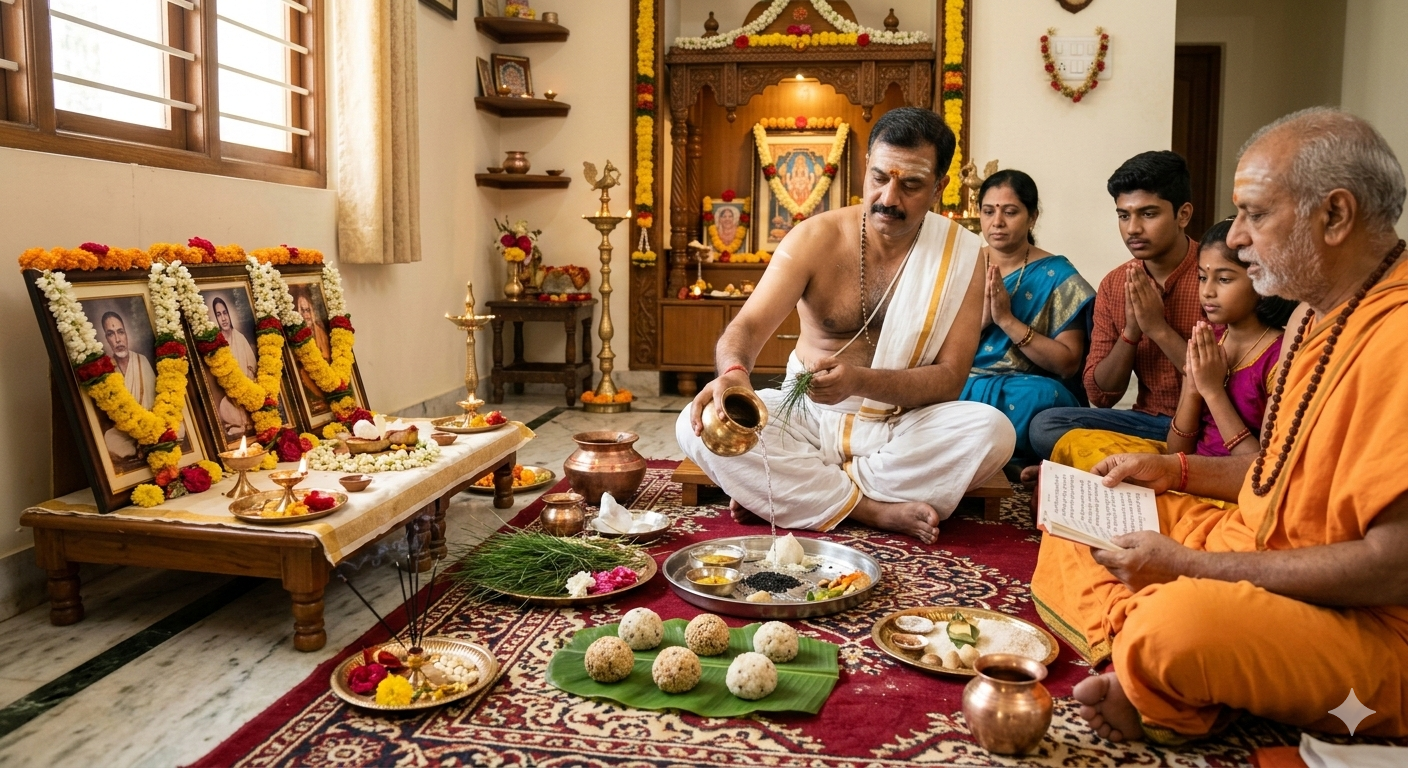
Pitra Tarpan is the most sacred ritual in Sanatan Dharma for Hindus which should be done in
Pitra Paksha (Kanagat/Mahalaya/Shraddha). These are the most auspicious days to perform
Tarpan Ritual during the year. As per Hindu religious practices, it is believed that the ancestors wait for their descendants
to perform the Tarpan Ritual to receive food after coming to earth during Pitra Paksha.
Performing the Tarpan Rituals brings blessings from Pitrus (your ancestors) and removes
hurdles in day-to-day life.
Why Should We Do Pitru’s Tarpan Puja
The Tarpan Rituals are viewed not as a curse but as an indication of unfulfilled ancestral
obligations, arising when our ancestors are not honored through performing rituals like
Tarpan, Shraddha, and Tri Pindi Tarpan. This is a sacred chance to address the Pitrus
Tarpan prayer with humility and thank our ancestors while moving forward in life with
harmony.
- Done for peace and Moksha of the departed souls and removal of karmic debt/blockage.
- For removing hurdles and struggles in career despite sincere efforts.
- For recurring financial losses.
- For recurring health issues to individuals or to the progeny.
- For individuals having recurring difficulties, unexplained hold-ups and mental instability.
- For individuals not getting marriage proposals for their children.
- For females facing miscarriage or failure of IVF.
- Delay in childbirth or no male child in family.
- Cracks in the internal and boundary walls of the house.
- Frequent dreams of ancestors.
Where Should This Be Done
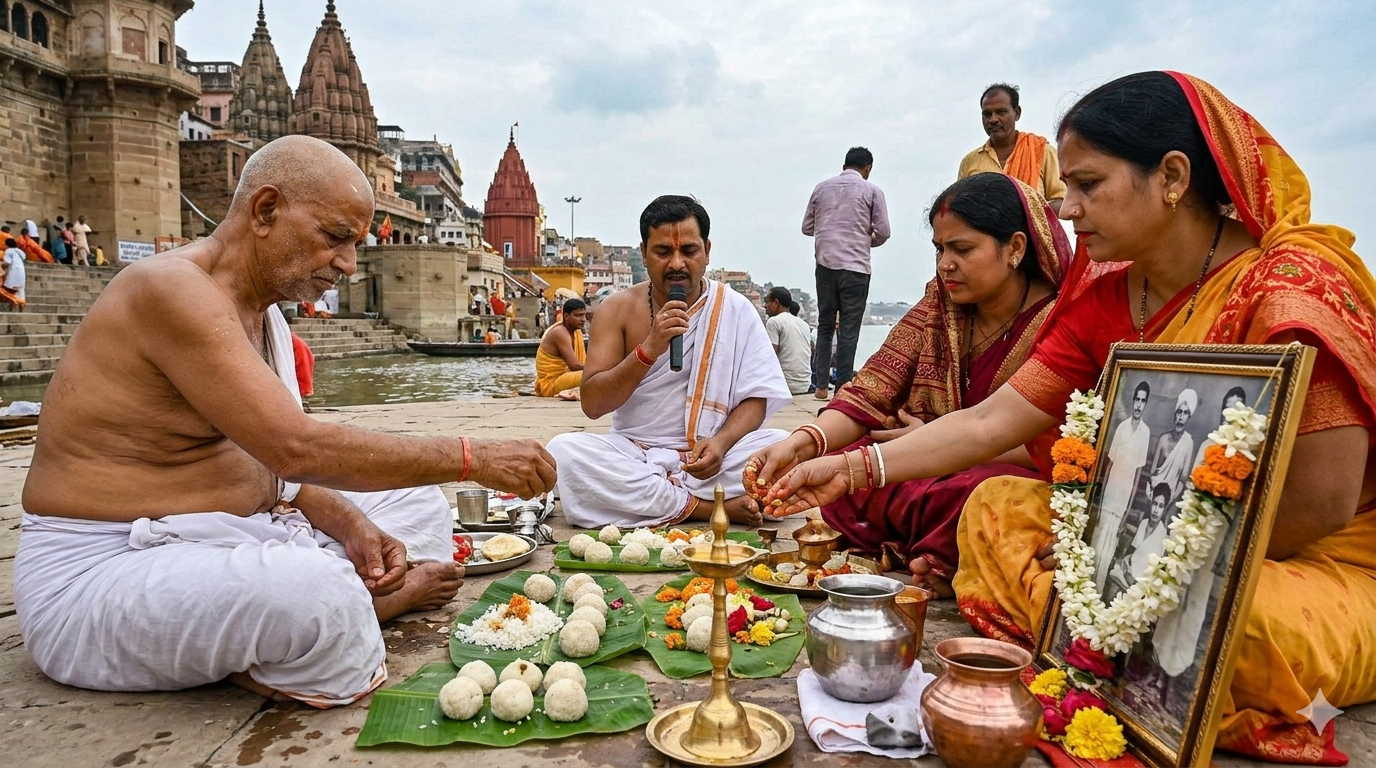
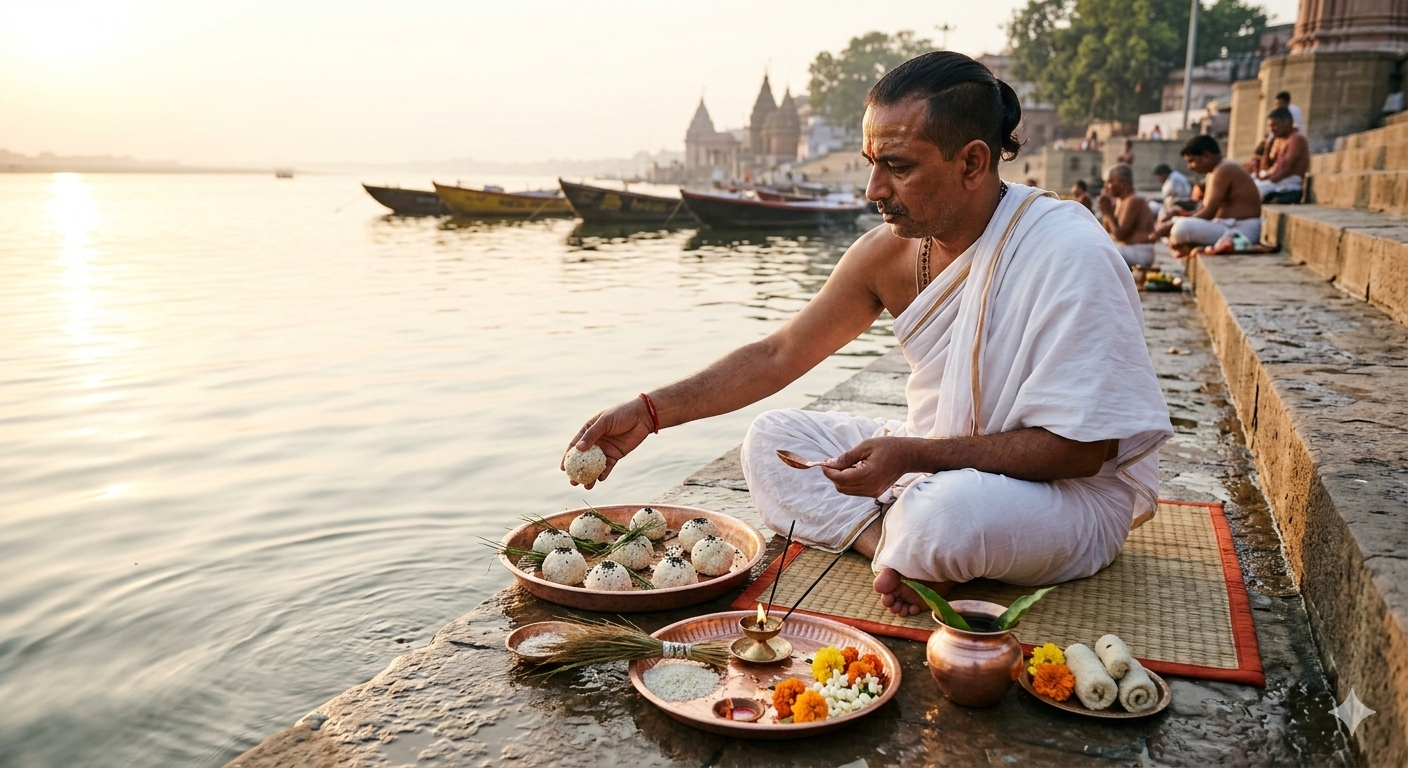
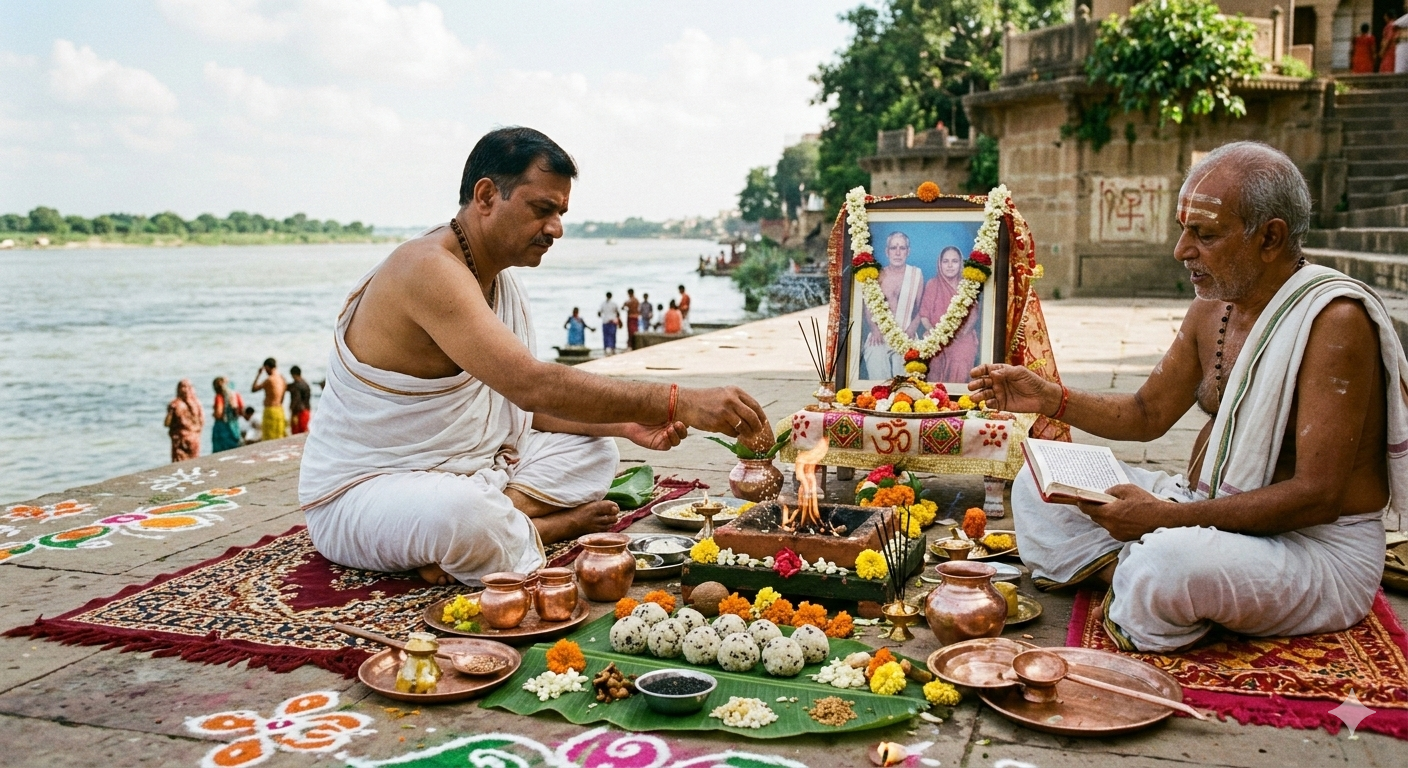
Most sacred places to perform Tarpan Ritual are Adi-Teerth Soron Shukara Kshetra,
Haridwar, Gaya and Kashi. The Soron Shukara Teerth Kshetra where VARAHA AVATAR
(Boar Incarnation) was believed to be incarnated and attain liberation, is the most sacred
place to perform the Tarpan Ritual.
As written in our scriptures, performing Pitra Tarpan Puja in Gaya liberates the soul from
Thal (Earth), while in Kashi the soul gets liberated from Jal (Ocean) and Thal (Earth). In
Shukara Kshetra Soron, the soul gets liberated from Jal, Thal and Akash (Ocean, Earth
and Space), finally reaching Moksha Dham – Vaikunth at the eternal feet of Sri Vishnu ji.